
.svg)


The first step back for retinal
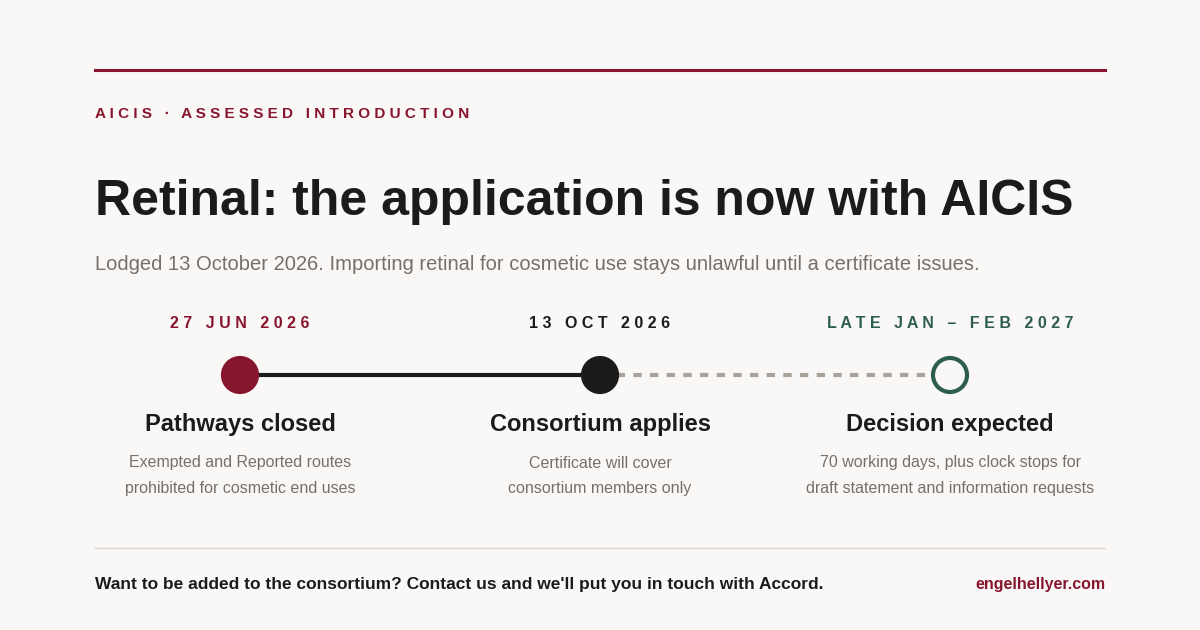
In June we reported that AICIS had closed the Exempted and Reported pathways for retinal (retinaldehyde) in consumer end uses, including cosmetics, with effect from 27 June 2026. From that day, the only lawful route to import retinal for cosmetic use was an assessed introduction, under an assessment certificate.
That route is now in use. An application for an assessment certificate covering retinal in cosmetic products, and in raw materials for the manufacture of cosmetic products, was lodged with AICIS on 13 October 2026.
The application was made by Accord Australasia on behalf of a consortium of its members, and was prepared by Engel Hellyer & Partners.
Only consortium members will be covered
This is the point most brands need to know. An assessment certificate covers only the persons it is issued to. When this certificate issues, it will authorise introductions by members of the consortium, not the market at large.
If you want to import retinal, or products containing it, under this certificate, you need to be part of the consortium. Contact us and we'll put you in touch with Accord.
When to expect a decision
Under section 32 of the Industrial Chemicals Act 2019, AICIS must decide an assessment certificate application within 70 working days of it being made.
Working days are not calendar days. Weekends and public holidays don't count, and the Industrial Chemicals (General) Rules also exclude 27 to 31 December. On that basis, 70 working days runs to late January 2027.
That is the earliest realistic date, not the likely one, because the clock stops in two situations:
- The draft assessment statement. Before deciding, AICIS must give the applicant a draft assessment statement for comment. The time the applicant takes to respond, up to the period AICIS allows, does not count towards the 70 days.
- Requests for further information. If AICIS asks for more information, the time taken to respond does not count either.
So a decision in late January to February 2027 is a fair expectation, depending on how many questions AICIS has.
What it means for brands now
Nothing changes until a certificate issues. Importing retinal for cosmetic use without an assessed introduction remains unlawful today. A lodged application is not an authorisation.
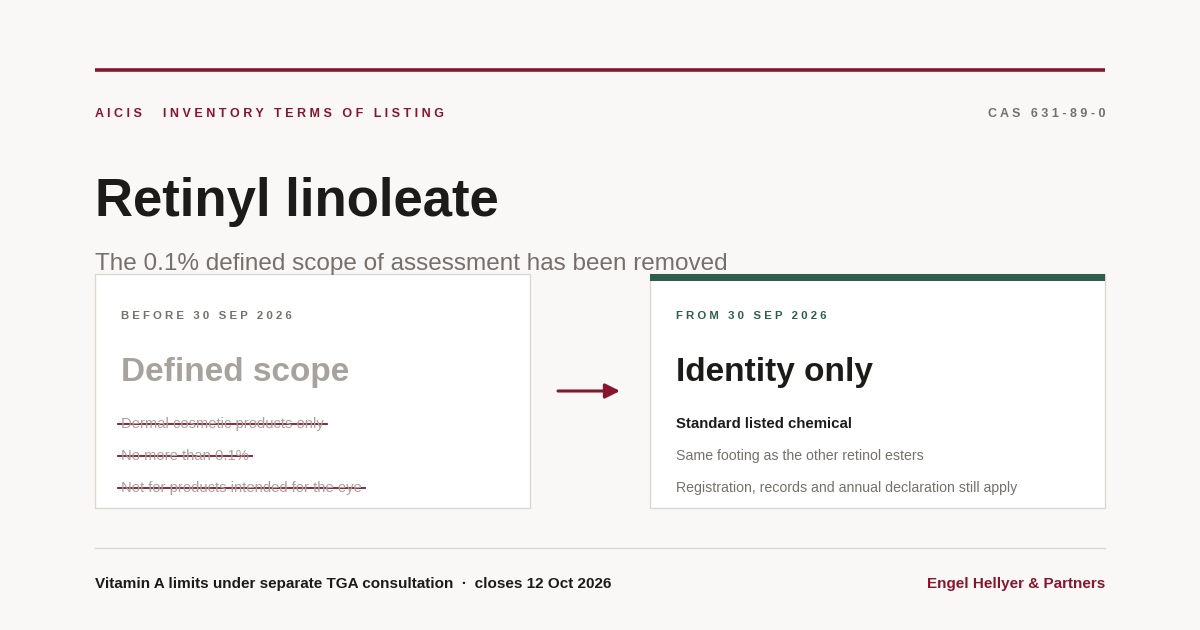
A certificate will have terms. Assessment certificates can carry a defined scope and conditions, for example on concentration, product type or area of application. Introductions outside those terms are not covered. We saw with retinyl linoleate this year how much a term of listing can matter.
The Poisons Standard is separate. An AICIS certificate does not settle the scheduling position. Keep an eye on the vitamin A scheduling proposal as well, which deals with retinol and its esters.
Plan now, not in January. If retinal products are in your pipeline, sort out consortium membership first. Then work out what formulations you'd want to bring back, at what levels, and what labelling and records you'll need, so you're ready to move when a decision issues.
How Engel Hellyer & Partners can help
Assessed introductions are among the most demanding applications under AICIS, and they're work we do. We can review your retinal formulations against the likely terms, plan your re-entry, and keep you posted as the assessment progresses.
Between us our directors bring around a century of combined regulatory experience, including time inside the industrial chemicals regulator itself.
If retinal is part of your range, or you'd like to have it back, contact us and we'll put you in touch with Accord about joining the consortium.
This article is general information only and does not constitute regulatory advice for any specific product or introduction. Timeframes and outcomes are matters for AICIS; confirm the current position before acting.
Further reading
Primary sources:

.svg)